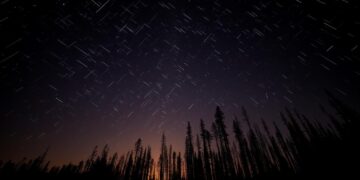
The night sky is a breathtaking spectacle, filled with celestial wonders that captivate our imagination. But, light pollution from urban areas often hinders our ability to fully appreciate this natural beauty.
In the wilderness, the situation is different. Here, the darkness allows for an unobstructed view of the night sky. This makes it an ideal location for stargazing and astronomy.
Escaping the glow of city lights, we can experience the true majesty of the celestial world. The wilderness offers a unique opportunity to connect with the universe. It fosters a deeper appreciation for the vastness and mystery of the cosmos.
The Importance of Star Gazing
Star gazing has always been a big part of human culture. It acts as a calendar, a storybook, and a source of wonder. For centuries, people around the world have shared stories about the constellations. They’ve woven myths and meanings into the night sky.
Star gazing is more than just a fun activity. It deeply affects our mental health and our bond with nature. In today’s fast world, looking at the stars can be a great way to relax and reduce stress.
Being in nature, away from city lights, helps us reconnect with the world. This can bring calm and well-being, helping our mental health.
Star gazing encourages us to slow down and see the universe’s beauty. It’s something everyone can enjoy, bringing people together in wonder.
As we face modern life’s challenges, star gazing reminds us of our place in the universe. It fills us with awe and appreciation for nature.
Best Locations for Star Gazing in the U.S.
The quest for the perfect stargazing spot ends in the U.S., where dark sky parks offer unparalleled views of the celestial world. The United States is renowned for its diverse landscapes, many of which provide ideal conditions for stargazing.
Among the top recommendations for stargazers are national parks that have been designated as Dark Sky Parks by the International Dark-Sky Association (IDA). Joshua Tree National Park is a top spot. It offers visitors the chance to admire the Milky Way for the first time in their lives.
Dark Sky Parks
Dark Sky Parks are areas recognized for their exceptional star-gazing conditions due to minimal light pollution. These parks are not only perfect for astronomers but also for anyone who wishes to experience the night sky in its full glory.
Joshua Tree National Park, an International Dark Sky Park, is a prime example. Its remote location and lack of artificial lighting make it an ideal spot for observing the stars. Visitors can enjoy unobstructed views of the night sky, making it a haven for stargazers.

Other notable mentions include Big Bend National Park in Texas and Death Valley National Park in California, both of which are also recognized as Dark Sky Parks. These locations offer unique stargazing experiences due to their dark skies and minimal light pollution.
When planning a stargazing trip to these locations, it’s essential to check the best viewing times and prepare. Many of these parks also host stargazing events. These events provide an opportunity to learn more about the night sky and its wonders.
For those interested in exploring more, the IDA website is a valuable resource. It helps find Dark Sky Parks across the U.S. and plan your next stargazing adventure.
Tools and Equipment for Star Gazing
The right stargazing equipment can make a big difference in seeing the night sky. Beginners need to know the basics to enjoy star gazing more.
Keeping your night vision sharp is key. Use red lights only. Bright white lights can mess up your dark vision. It takes 20-30 minutes for your eyes to adjust to the dark.
Telescopes and binoculars are both great for the night sky. Binoculars are perfect for beginners because they’re easy to use and show a wide view. Telescopes give more detailed views but need more setup and knowledge.
You don’t need the most advanced gear to start. Simple tools can help you love the night sky more. As you get better, you can upgrade your gear for a better experience.
Understanding the Night Sky
Gazing up at the night sky can be a humbling experience. With a little knowledge, you can unlock the secrets of the stars and constellations.
The night sky changes throughout the year. This is because of the Earth’s rotation and orbit around the sun. For example, during the winter solstice, the sky shows a unique display of stars and constellations.
In places like Joshua Tree, the sunset in December can be as early as 4:30 pm. Full darkness falls by 5 pm. This gives you a long time to observe the night sky.

Understanding astronomy basics is key to appreciating the night sky. It includes knowing how to identify constellations. These are groups of stars that form patterns on the celestial sphere.
The position of the Earth and the time of year affect what you can see in the night sky. As the Earth rotates, different constellations become visible. This offers a changing display of celestial objects throughout the year.
To enjoy star gazing, it’s important to know what you’re looking at. Learn the names and stories behind the constellations. Also, know the notable celestial objects visible during different seasons. With this knowledge, the night sky becomes a rich tapestry of astronomical wonders.
The Science Behind Stars
The life of stars is complex, from start to finish. Astronomy helps us grasp these celestial wonders and their place in the universe.
Stellar life cycles start in huge clouds of dust and gas, like the Orion Nebula. This nebula is a place where new stars are born.
Stars go through stages, like the main sequence, where they turn hydrogen into helium. This process releases a lot of energy. When they run out of fuel, they can explode as supernovae.
Learning about the science behind stars makes us appreciate the night sky more. By studying astronomy, we understand the birth, life, and death of stars.
Planning Your Star Gazing Trip
To make the most of your stargazing trip, planning is key. You should think about weather and moon phases. A clear sky is vital for a great view of the stars.
Before you go, check the weather forecast. A cloudy or rainy sky can ruin your view. Use Dark Sky or Weather Underground to get accurate forecasts.
Checking Weather and Moon Phases
Don’t plan your trip during a full moon. The bright moonlight can hide the stars. Use a lunar calendar or Moon Seeker to find the best time to stargaze.

By planning well, considering weather and moon phases, you’ll have a memorable stargazing experience.
Making the Most of Your Star Gazing Experience
To truly enjoy stargazing, it’s essential to be well-prepared. This means bringing the right supplies and dressing appropriately for the conditions.
Comfort and Safety First
When heading out for a night of stargazing, comfort and safety should be your top priorities. Bringing food and water is key as most stargazing spots lack running water. It’s also wise to pack enough snacks to keep your energy up all night.
Dressing for the Occasion
Temperatures can drop quickly in the evening, so layer up. Wearing comfortable, layered clothing helps you adjust to the changing temperatures. This way, you’ll stay comfortable all night.
By focusing on comfort and safety, you can fully immerse yourself in the stargazing experience. Enjoy the night sky to its fullest.
Stargazing Events Across the Country
From coast to coast, national parks in the U.S. host various astronomy programs and stargazing events. These events attract enthusiasts of all ages. They range from guided night walks to telescope viewing nights, with something for everyone.
Many national parks offer night sky programs. These include telescope astronomy events and full moon walks with rangers. These programs aim to educate visitors about the night sky and its wonders. For example, parks like Yellowstone and Yosemite have regular stargazing events. Visitors can learn about constellations and celestial bodies.

Some national parks also offer astronomy programs that explore the science behind the stars. These programs feature presentations by park rangers and guest astronomers. They provide a unique chance to learn about the universe.
Whether you’re an experienced astronomer or just enjoy looking at the stars, these events are for you. They offer a chance to connect with nature and learn more about the night sky. So, next time you visit a national park, check out their stargazing events and programs.
Environmental Considerations
The beauty of stargazing isn’t just in the stars. It’s also about keeping the environment right for it. As we gaze up, we must think about how we affect the night sky.
Light pollution is a big problem. It’s when city lights make the sky bright, hiding the stars. Places like Joshua Tree face this issue, with some spots being darker than others. A conservationist said, “The night sky is a natural resource, just like water and air, and it needs to be protected.”
“The night sky is a natural resource, just like water and air, and it needs to be protected.”
We all play a part in saving dark skies. Simple actions can help. For example, using light that doesn’t spread out, turning off lights when not needed, and supporting dark sky groups.
It’s also key to be careful while stargazing. Follow park rules, keep campfires small, and don’t throw trash. Every little bit helps keep our skies beautiful for others to see.
By caring about the environment, we can keep the night sky amazing. We must keep up the good work to protect our dark skies for the future.
Share Your Star Gazing Adventures
Capturing the beauty of the night sky is thrilling. Use a tripod to stabilize your camera for sharper images. Manual settings help adjust to low light, capturing stunning Milky Way photos.
Sharing your stargazing experiences inspires others. Post your photos and stories on social media or join local astronomy clubs. This creates a community among stargazers. You can also learn from others and gain new insights into astronomy.
Keep exploring the night sky and try new photography techniques. From the Milky Way to meteor showers, there’s always something new. By sharing your adventures, you keep the excitement of astronomy alive.